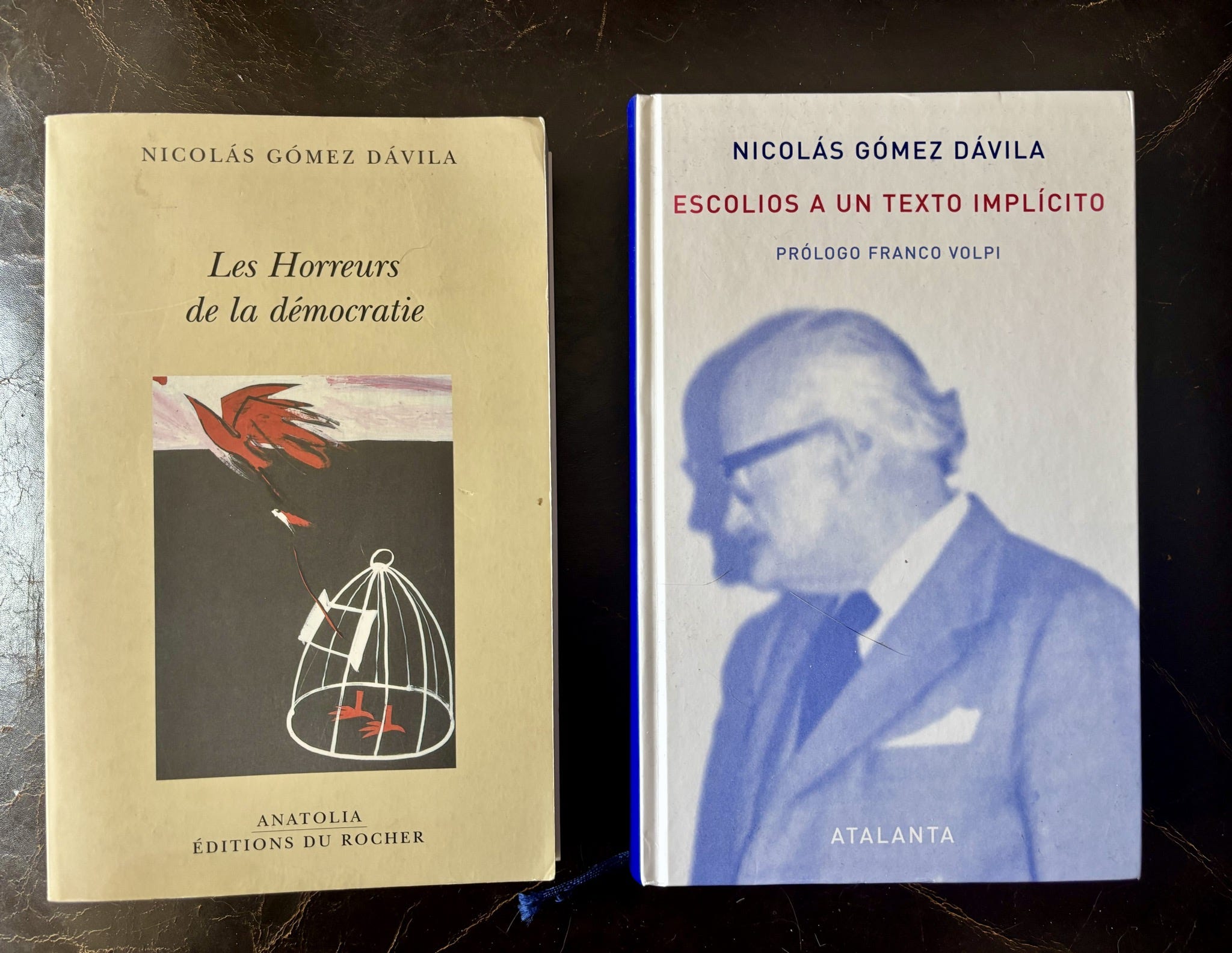
I don’t remember when I discovered Nicolás Gómez Dávila (1913-1994) and his escolios—literally scholia, in fact aphorisms—but it could have been on Juan’s blog in 2004. He reminded me of two writers I loved (and still do): Philippe Muray, for his aversion to “modernity” and outwardly “reactionary” stance, and Bernanos on for religious side. I first purchased a (poorly titled) French translation—dont j’ai copié des extraits ici—and later found a Spanish version in Madrid at a small bookshop near the Prado museum:
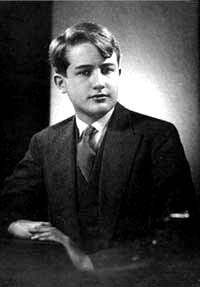
Gómez Dávila was Colombian and lived most of his life in Bogotá. But he first lived in Paris, where he attended a school of the Benedictine order, and after suffering from a lung disease was tutored privately. He never attended university and returned to Colombia at 23, where he spent the rest of his life surrounded by books. This is one of the rare photos from his youth:
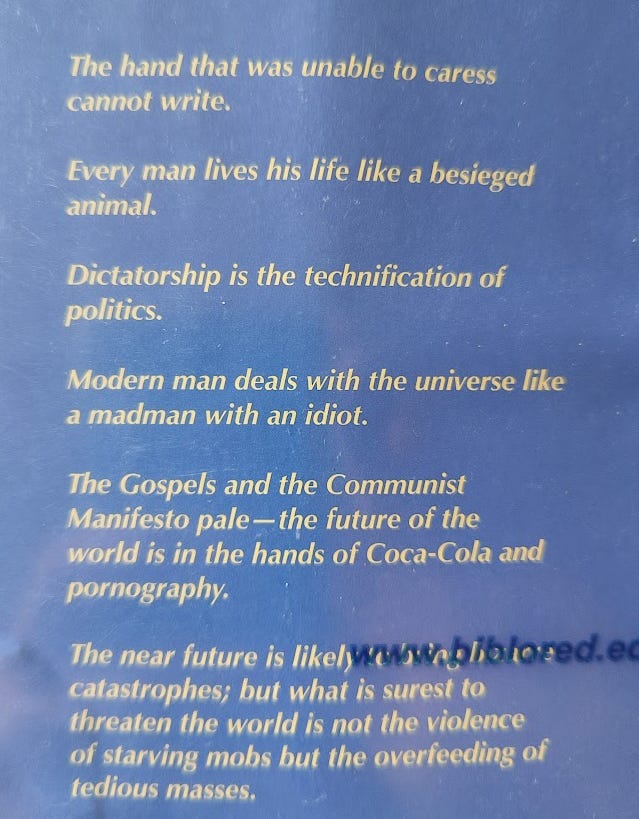
He never wrote fiction, and barely any prose at all. He wrote aphorisms, thick collections of them. Here are some excerpts translated in English (you’ll find many more in his Escolios Escogidos [“free” PDF], an edition sorting his escolios by theme):
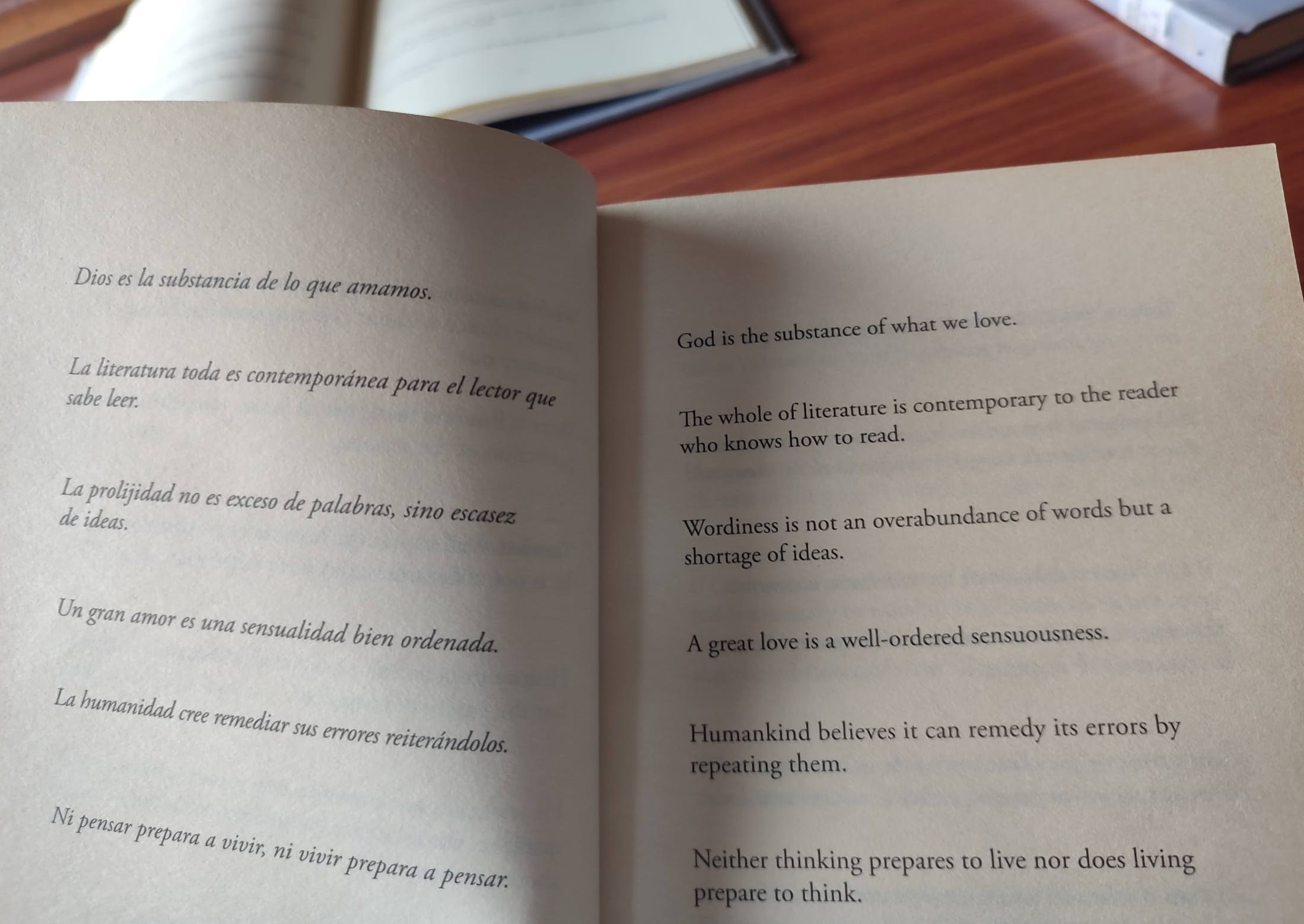
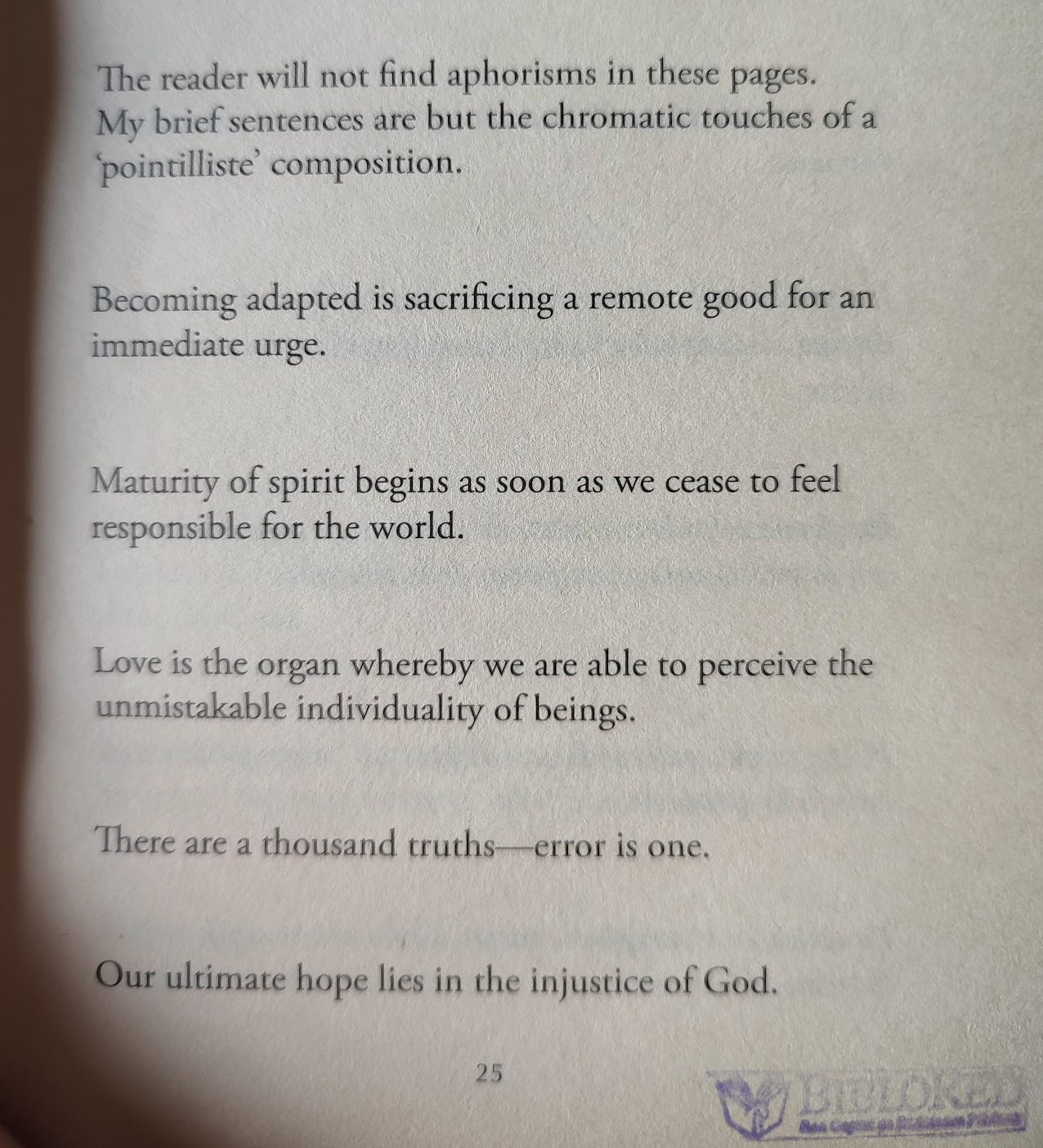
This isn’t poetry but it bears its qualities: minimalism, elegance, distilling the erudition of literature and history in incisive fragments; “utmost compression and rejection of system-building,” says that book’s prologue.
Interestingly, Gómez Dávila is better known in Europe than in Colombia and the Americas. His Wikipedia biographies in Spanish and English are largely incomplete, the German one being the most detailed. So I didn’t expect him to be as celebrated as García Márquez in his hometown, but still expected a little recognition.
I found nothing. None of his books in the dozens of bookshops I visited in Colombia. None of the bookshop owners had heard about him, even that former philosophy student I met in Medellín who knew various obscure philosophers. Shelves of García Márquez works, but not a page of Gómez Dávila. Needless to say, no street named after him.
Nothing, until I visited a large public library in Bogotá, where I finally found his books after passing two security checkpoints and asking three employees:
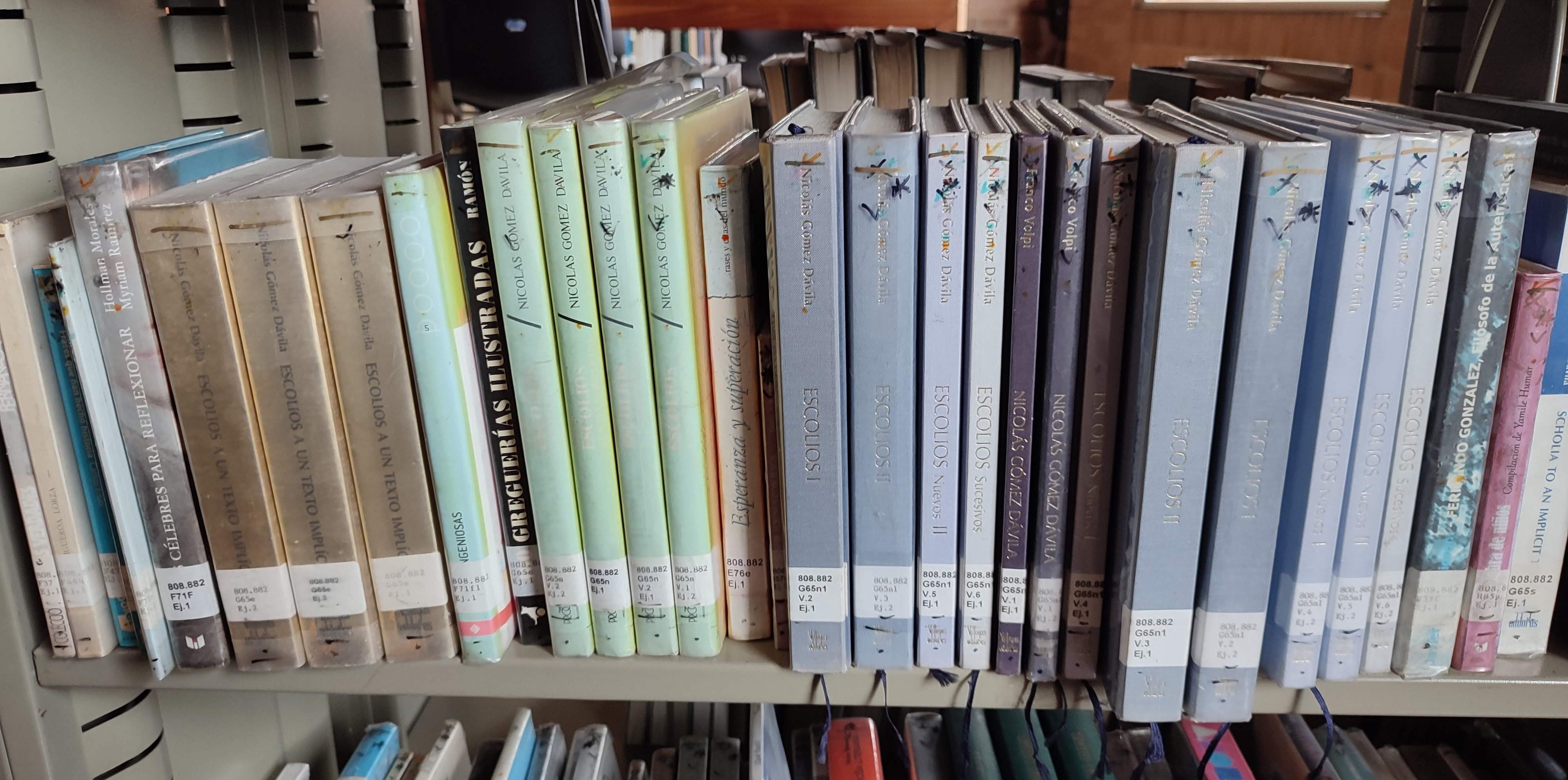
This shelf includes all his collections of escolios in various editions, though not his complete writings (it misses the Notas and Textos I):
Escolios a un texto implícito (2 volumes, 1977)
Nuevos escolios a un texto implícito (2 volumes, 1986)
Sucesivos escolios a un texto implícito (1992)
In that library, I also discovered this bilingual volume from which I took the excerpts above:
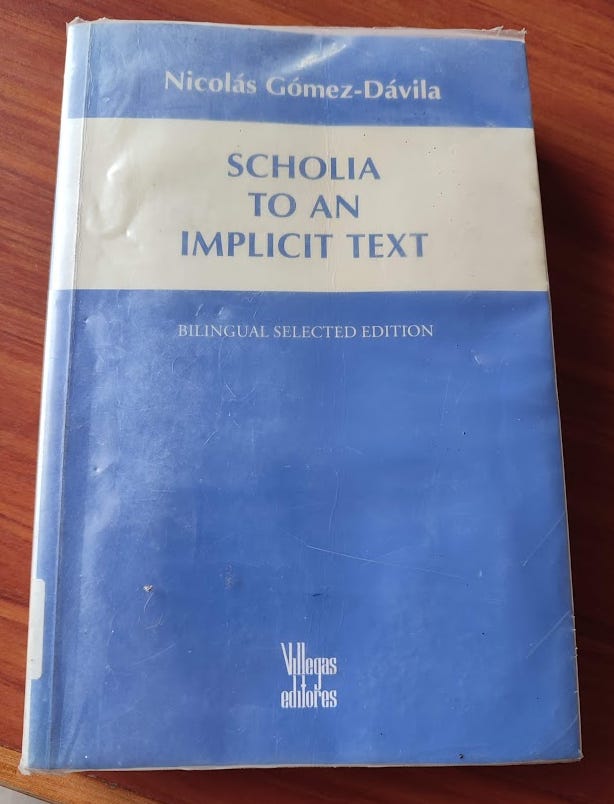
It includes an introductory essay I’d never read, by the German historian Till Kinzel:
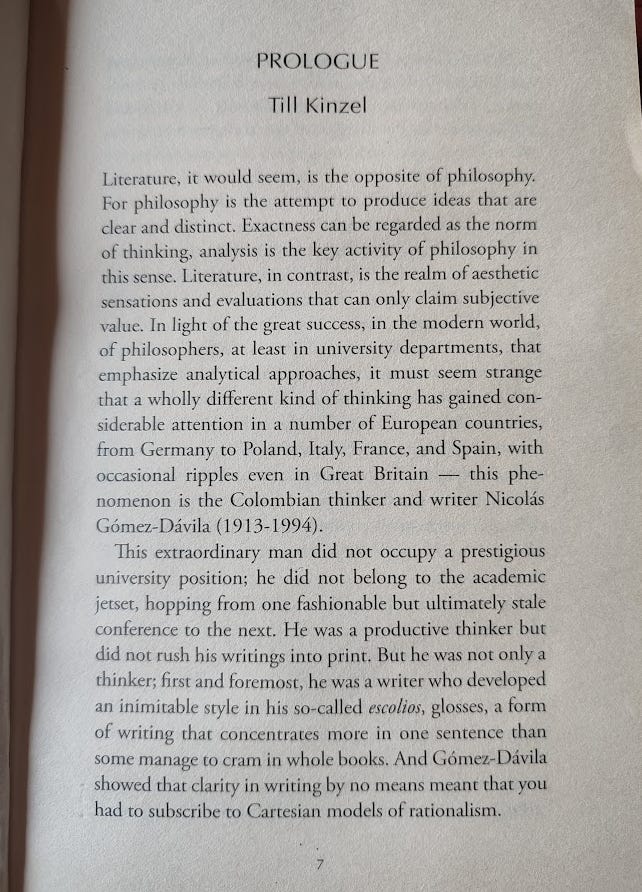
I photographed this prologue’s pages and OCR’d them into this PDF (I’m sure M. Kinzel won’t mind.)
That’s not the only place in Bogotá where you’ll find his books. You can literally browse books from his personal library (and some of his manuscripts) at the Biblioteca Luis Angél Arango. But you need to make an appointment in advance and justify your visit as a researcher. Alas, I found out too late. Next time.