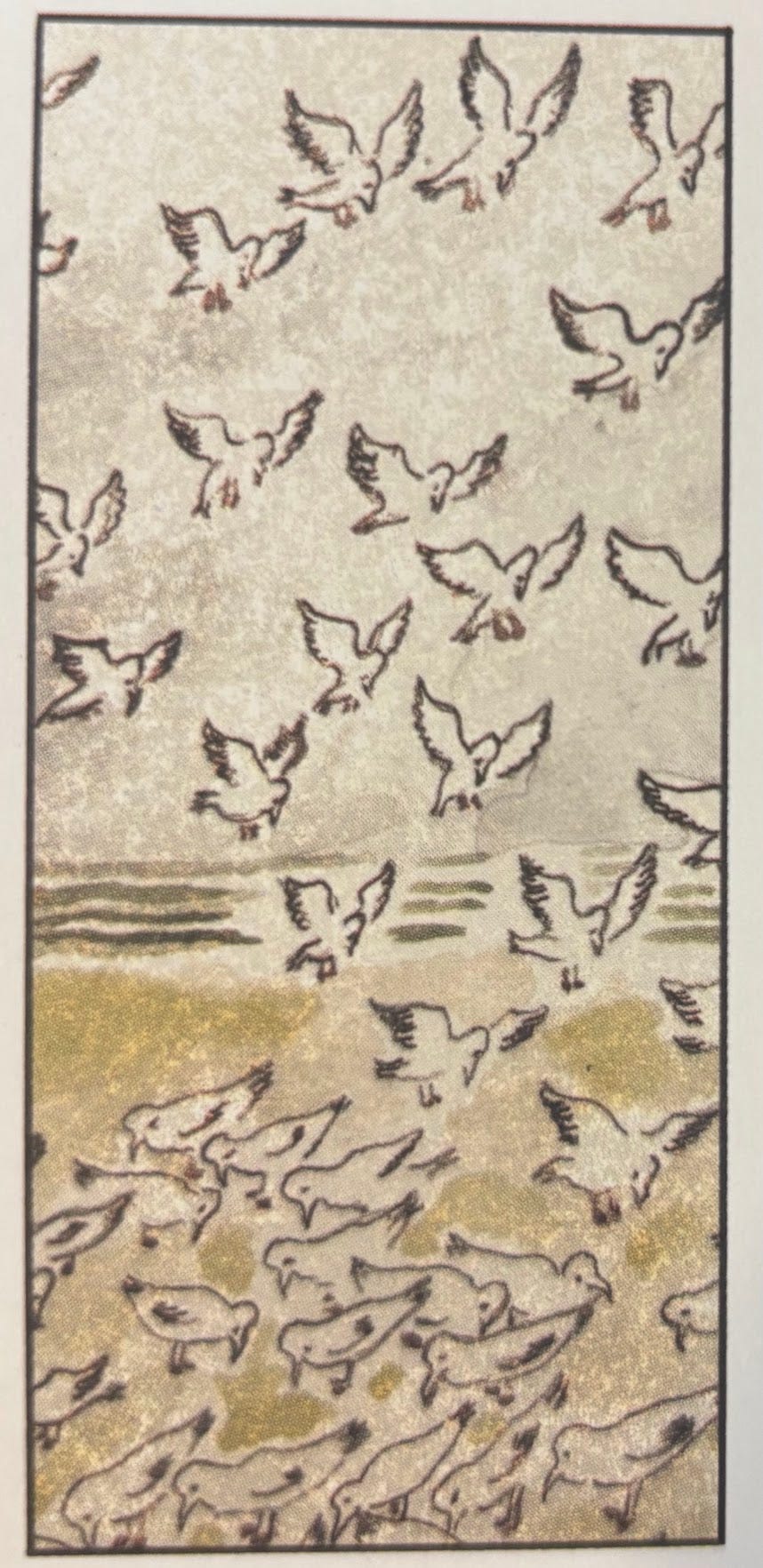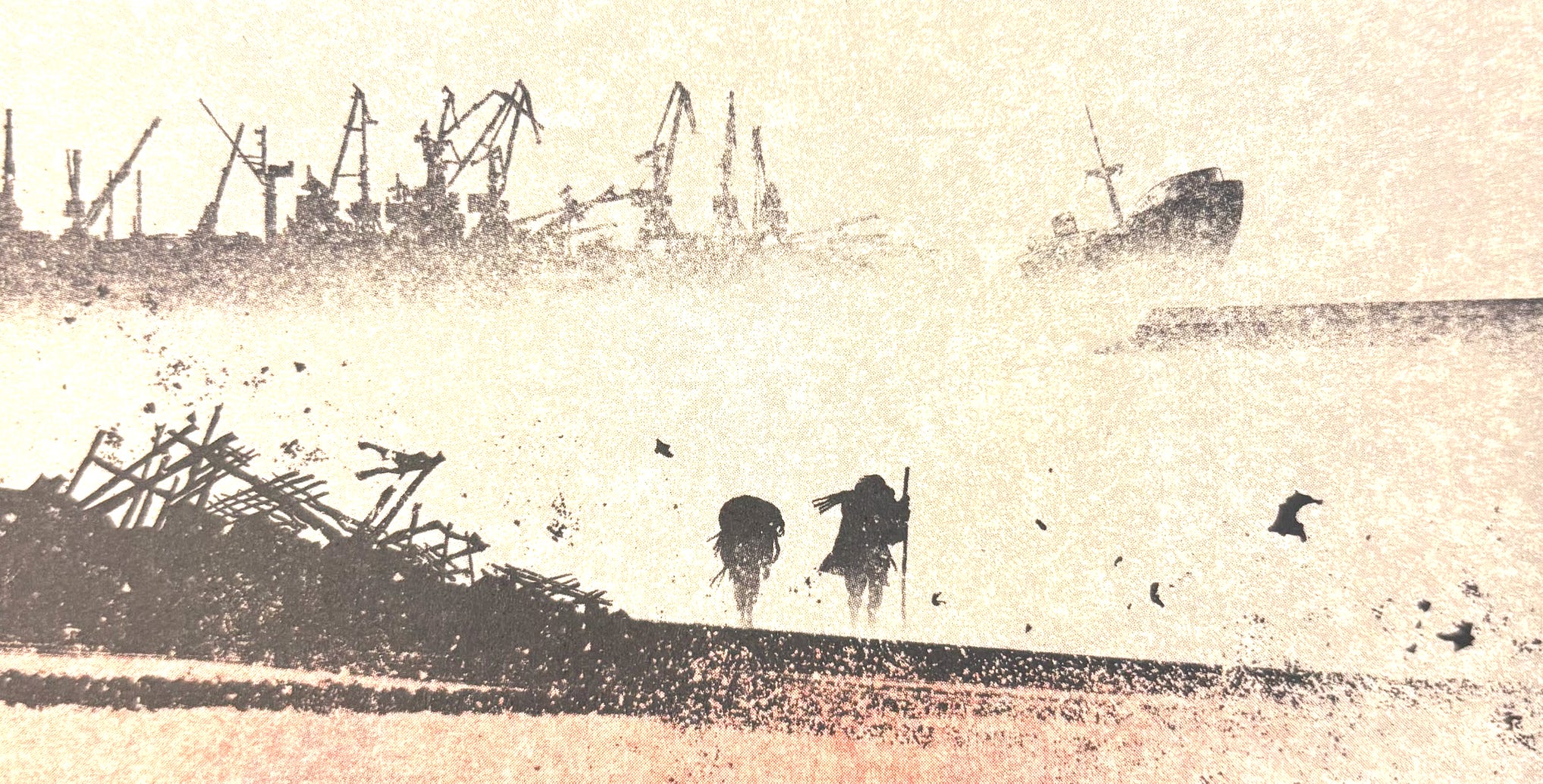
McCarthy’s The Road doesn’t strike you as the most adaptable novel, for it draws a lot of its power from what’s left unsaid and from its stretches of silence and the repetitious scenes of the man and his son wandering in the nowhere of a world crumbling into ash, figuratively and literally. And yet, the graphic novel by French cartoonist Manu Larcenet* translates it into a visual language that’s, in my opinion, faithful to McCarthy’s vision in its aesthetics and restraint.
*I rarely read comics or graphic novels (apart from The Road, I only own Watchmen and The Far Side Gallery, both gifts from friends), so although I’m also French I’d never heard of Manu Larcenet, one of France’s most acclaimed comic artists. He first published the French version (which I bought first and have since given to my mother) and less than a year later, the English edition was published using McCarthy’s original text.

In this short post I’d like to give you a glimpse of this work, by sharing excerpts of the graphic novel (under fair use terms) as well as my impressions about it and how it differs from the novel.
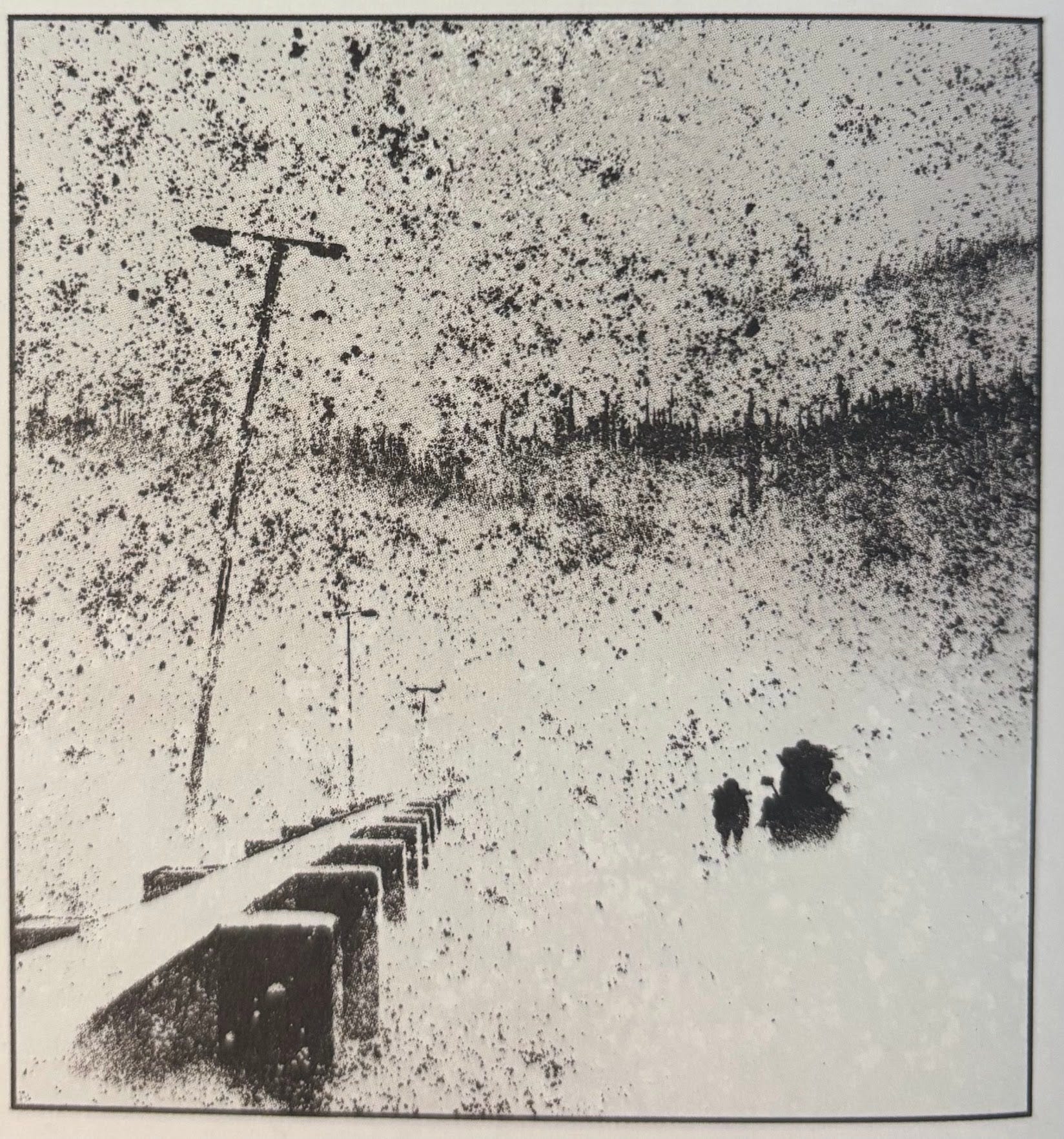
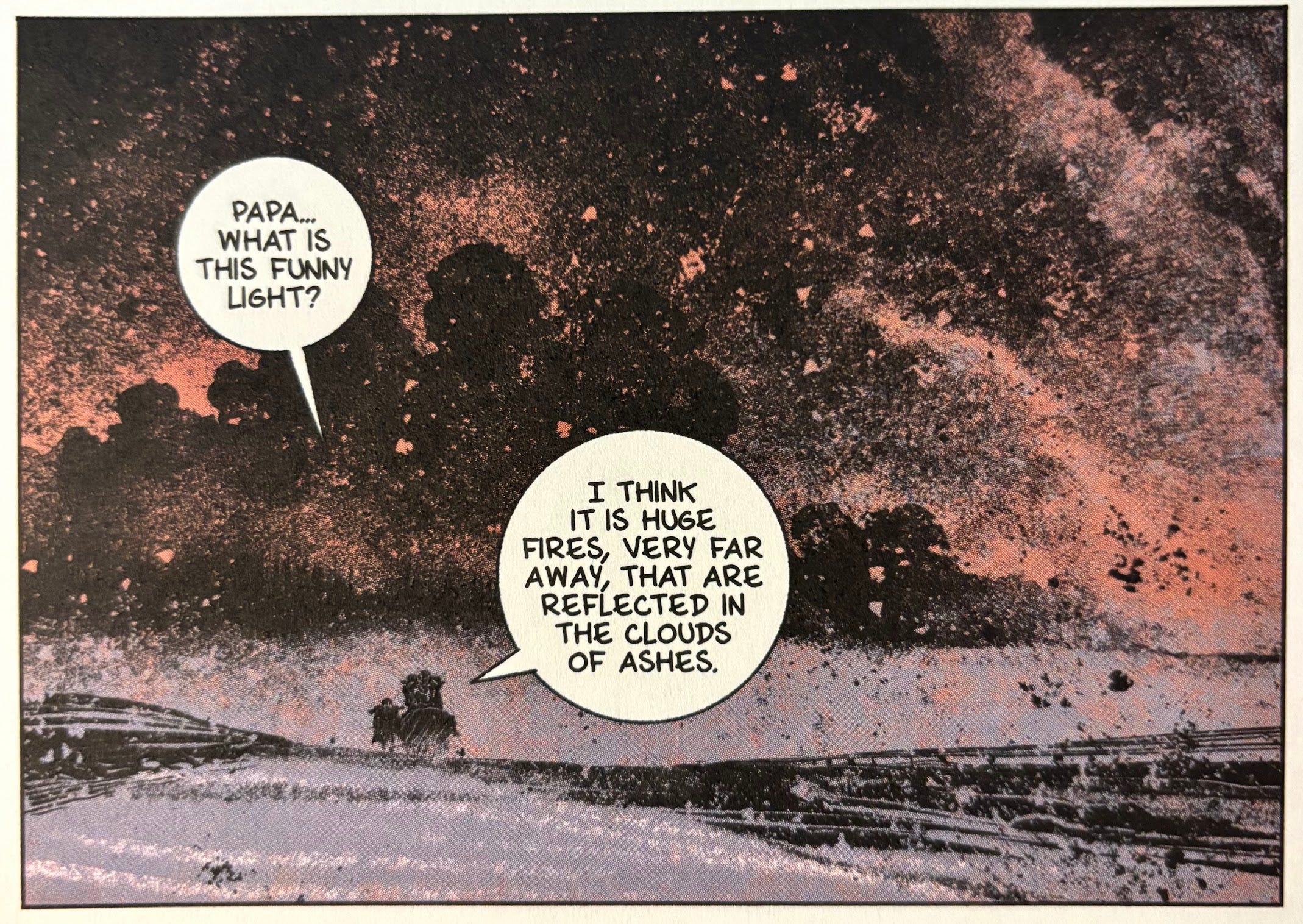
Most pages are nearly monochrome, fitting the novel's barren, brittle, and ash-ridden environment, with shifts in color tone and temperature keeping the journey from being visually repetitive. Some pages feel colder, others drier, duskier, or scarier.
The protagonists' faces are remarkably designed, worn away from hunger, cold, and despair, but not cartoonish or exaggerated:
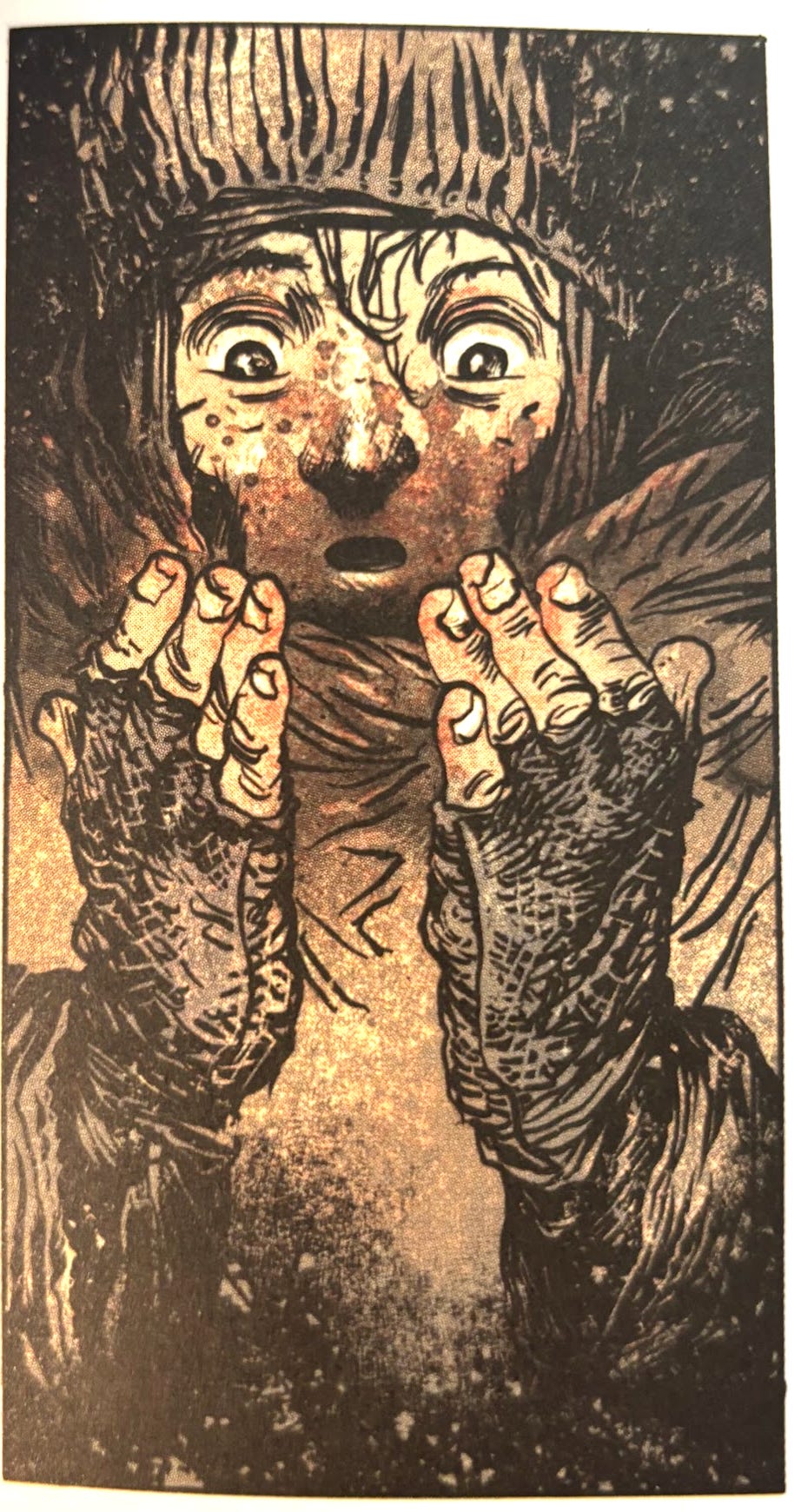
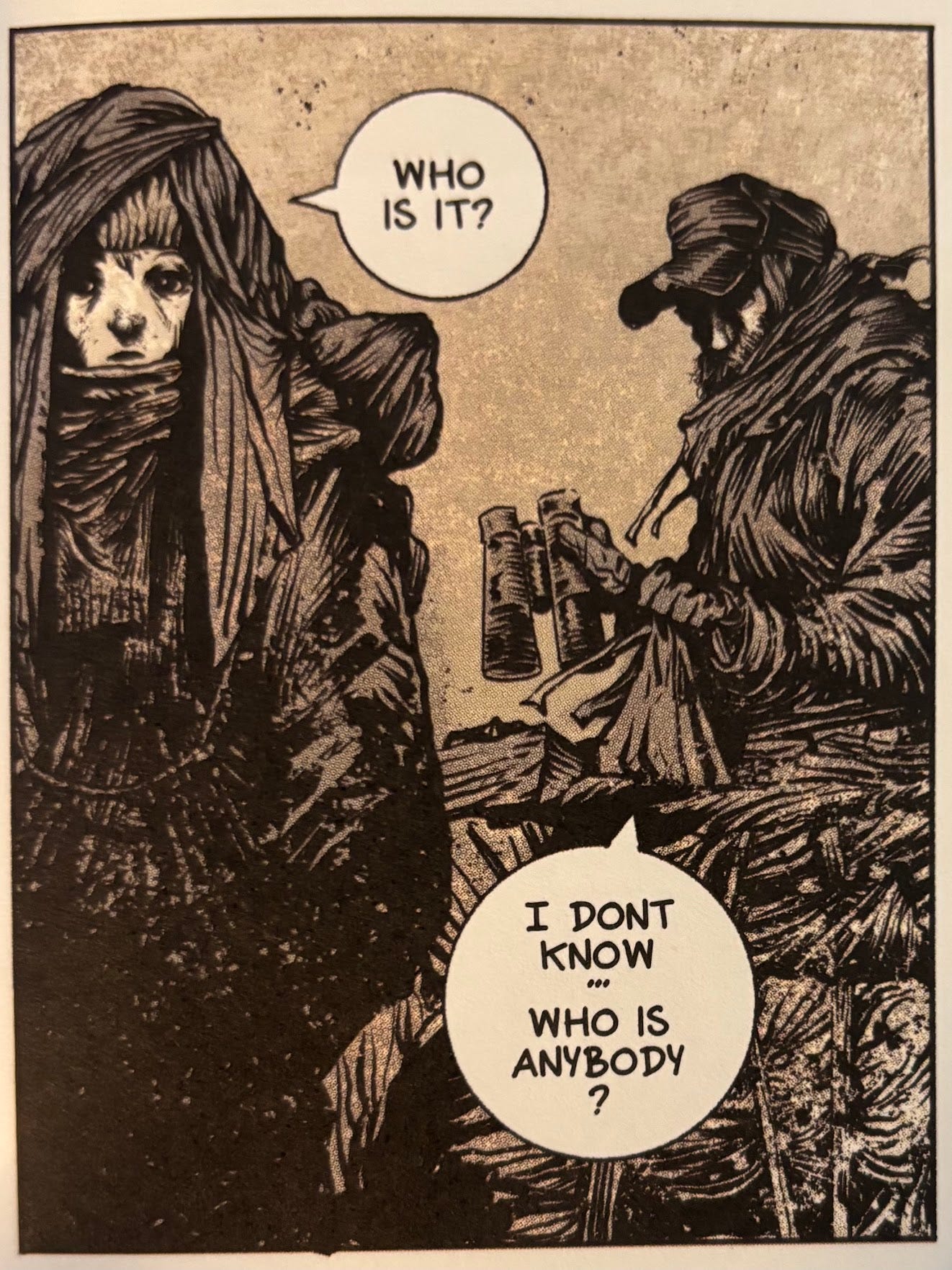
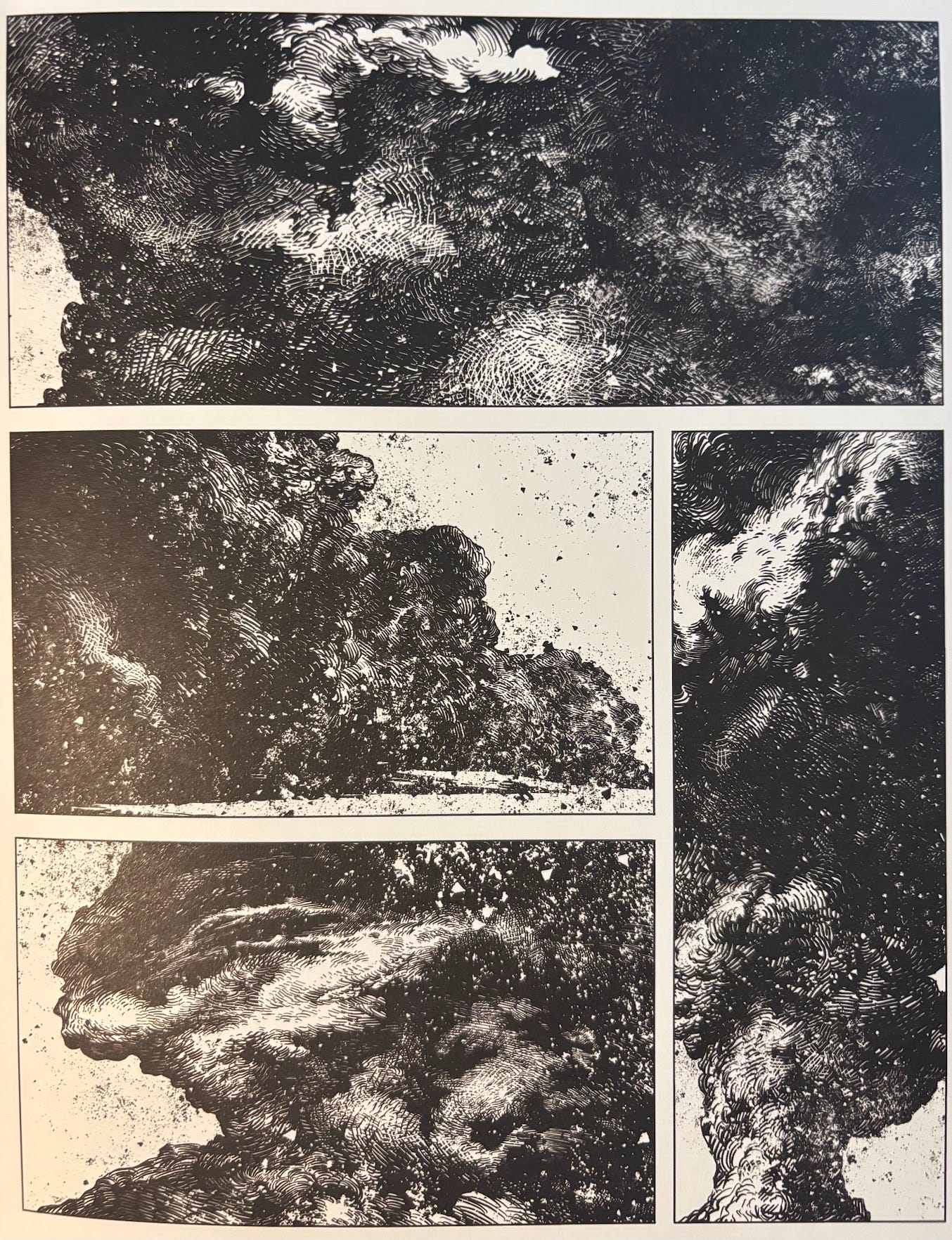
I think that one of the greatest strengths of Larcenet’s work is its confidence in visual storytelling, with many textless pages and stripped-down panels, consistently with McCarthy’s writing restraint. Larcenet isn’t afraid of pages like this:
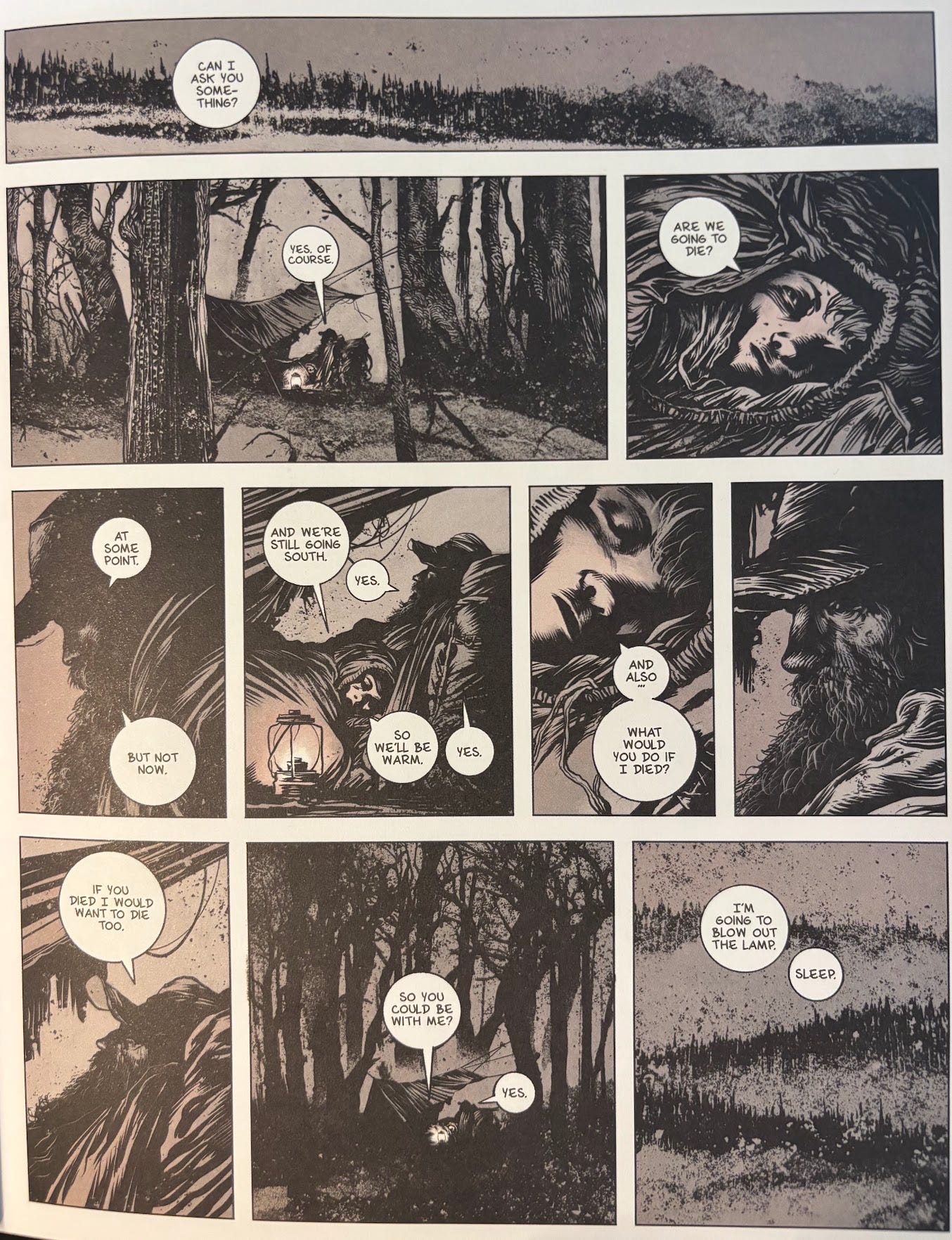
The text is 95% straight from McCarthy’s novel, with only minor tweaks to fit the comic format. It includes almost all the most memorable moments of the book, like this one:
However, three choices feel unfortunate to me:
The encounter with the thief who steals the shopping cart is one of the most climactic scenes of the book (and a defining moral moment for the kid), however it passes relatively quickly in the graphic novel.
The graphic novel doesn’t state or allude to the mother’s suicide. We’re just told that she’s dead, whereas the novel includes the memory of a dialogue between her and the man. That’s one of the darkest parts of the books, s I don’t understand why it’s been left out.
The omission that surprised me most is at the end, where the famous phrase “carrying the fire” is absent. This is a central symbol of the novel, with semi-religious significance, and again I wonder why it’s been deliberately omitted.
McCarthy reportedly reviewed roughly the first half of the adaptation before his death and approved its direction, though he didn’t get to review and comment on the completed work.